| Back to Back Issues Page |
 |
|
Too many worms is a good problem to have #Issue 111 September 04, 2026 |
Global Edition
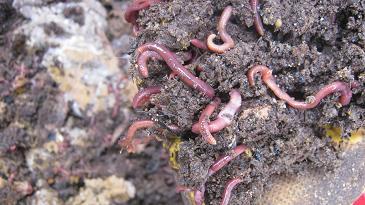
When Your Worms Multiply============================================================= GLOBAL WORMING NEWS — September 2026 How to Know Your Bin Is Full, How to Split a Colony, and When to Start a Second Bin - Stephan Kloppert | worm-composting-help.com ============================================================= Hi, every few weeks, someone writes to me in a mild panic. “My bin is a solid mass of worms.” “There must be a million of them bursting out the top.” “What do I do when there are just TOO MANY worms?” I love these messages, because they almost always mean you’ve done something right. Some time ago a reader named Bernie asked me exactly this, and I promised on my website that I’d one day write a proper, detailed article about worm populations — how they grow, how they settle, and what to do when your bin fills up. This is that article. Wherever you are in the world, your worms are thinking about this too right now — just in opposite directions. Up north, your bins are at their fullest after a summer of breeding. Down south, your bins are waking up and about to surge. So this issue has something timely for both of us. Let’s start with the part that will calm most of you down. PART ONE — FOR EVERYONEThe good news first: a full bin is rarely an emergency Here is the single most important thing I can tell you about worm populations, and it’s something I’ve watched hold true for more than 25 years: your worms regulate themselves.Once a colony reaches a comfortable density for its space and food, the worms quietly slow their breeding right down and hold the population steady. They will not keep multiplying until they suffocate. A worm bin is not a goldfish that grows to the size of its tank and then bursts. So, when you look in and see a writhing mass, your first job is not to act. It’s to relax. In most bins, if you did absolutely nothing, the population would settle on its own. That said, “do nothing” isn’t always the best choice — and there’s one thing people badly mistake for overcrowding. Let’s clear that up before we do anything else. First, rule out the impostor!If your worms are climbing the walls, gathering on the lid, or trying to escape, please do not assume the bin is overcrowded. In my experience that is almost never the real reason.Worms trying to leave are usually telling you something is wrong with the conditions, not that there are too many of them. The usual culprits are bedding that’s too wet, a sudden change in feeding, a bin that’s gone sour and airless, or a shift in the weather (worms often get restless before or during rain). So, before you split anything, check the basics. Is the bedding damp, like a wrung-out sponge, not soggy? Does the bin smell earthy, not sour? Have you changed anything lately? Fix the conditions first. Nine times out of ten, the “overcrowding” walks itself back into the bedding. Real overcrowding is calm. Escaping worms are unhappy worms. Those are two different problems. How to tell your bin is genuinely fullOnce you’ve ruled out unhappy conditions, here’s what a genuinely full, thriving bin actually looks like:• When you lift the bedding, it’s dense with worms of every size — big-mature ones, smaller young ones, and tiny hatchlings. • Food disappears very fast. What used to take a week is gone in a day or two. • The bin is becoming more castings than bedding. It’s getting heavy and dark. • You can see the saddle band (the pale raised ring) on lots of your worms — that’s the sign of a mature, breeding adult. • You spot little lemon-shaped cocoons through the bedding. That’s a colony firing on all cylinders. As a rough benchmark, a comfortable “full house” is somewhere around a pound of worms — roughly a thousand of them — for every square foot / 0.092 m2 of surface area in your bin. They can pack in tighter than that, but that’s the easy number to picture. What to do about it — four good optionsWhen your bin is genuinely full, you have four honest choices, and none of them is difficult:1. Do nothing. As I said, they’ll self-regulate. This is a perfectly valid answer, especially if you’re happy with how fast the bin is processing your scraps. 2. Harvest your castings. Very often a “too full” bin is really a bin that’s overdue for harvesting. Taking out the finished castings makes space, resets the balance, and gives you your black gold at the same time. Two problems, one job. 3. Split the colony and start a second bin. Take out roughly a quarter to a third of the worms and set them up in a fresh bin. Now you’ve doubled your composting power — or you’ve got a bin to give to a friend or family member and hook them on worms too. 4. Move some to the garden. You can rehouse spare worms into a shady, permanently moist part of the garden or a compost heap. One firm warning, though: compost worms are not soil worms. They need constant moisture. If that patch ever dries out completely, they will die. Only do this where you know it stays damp. How to split a bin safely? If you go the second-bin route, here’s the gentle way to do it: A week or so before, feed heavily on one side of the bin. Most of your worms will migrate over to that side to feast. On the day, gently scoop out a good part of that dense, worm-rich portion — that should be a quarter to a third of your bins worm population. Set up the new bin first! Fresh moist bedding, and a good handful of the old bin’s castings mixed in. That familiar, living material carries the microbes your worms already know, and it gives them somewhere to hide while they settle. It genuinely lowers their stress in the new home. Keep both bins nicely moist, and feed lightly for the first week or two while everyone settles. Don’t overload a freshly split bin — let them find their feet first. That’s the whole method. It’s forgiving. NORTHERN HEMISPHERE— Your bins should be at peak population. Northern friends, your bins are as full as they’ll be all year right now. A whole summer of warmth and steady feeding has your colony at its breeding peak, and you’re heading into your productive autumn stretch, when worms stay active and hungry as the days cool.This makes September your natural moment to make a decision about all those worms — but timing matters, so read this carefully. If you want to split your worm bin population, do it now, early! A brand-new bin needs several weeks of decent warmth to establish before the cold sets in. Split in early autumn and the new colony has time to settle and build up before winter. Split too late, in the first cold snap, and you’re asking a small, thinly-populated bin to survive winter with little thermal mass — that’s a hard start. If it’s already turning cold where you are, don’t split — harvest instead. Pull some of your castings, make space that way, and hold the split until spring. Your worms will happily overwinter as one strong, dense colony. A packed bin actually holds its warmth better through the cold. Feed a little more generously while they’re still active, then ease off as the temperature drops and they slow down. A full bin going into winter is a well-fed, well-insulated bin. The short version: split early, or wait for spring. SOUTHERN HEMISPHERE— Your bins are waking up for the surge. Southern friends, we’re on the opposite side of the year, and honestly, we’ve got the easier hand this month. Your bins are waking up from the cool season. The worms are getting active again, appetite is returning, and the spring breeding surge is just ahead.Your population is about to climb. This is the prime window to split or start a second bin. If you set up a new colony now, it has the entire warm season ahead of it to establish, fill out, and thrive. A spring split is the strongest split you can make all year. Plan your second bin before the surge, not after. It’s much easier to divide a calm, waking colony now than to scramble when the bin is suddenly overflowing in a month or two. Get the new bin ready — bedding moist, a handful of old castings in — so you can move worms the moment they’re active. Watch the moisture level as it warms. Spring warmth and wind dry bedding out faster than you expect after the cool season. Keep checking that wrung-out-sponge feel, especially near the surface. PART TWO — FOR EVERYONEDid you know?That pale, saddle-shaped band you see on some of your worms — it’s called the clitellum, and it only appears once a worm is sexually mature and ready to breed.So next time you’re checking out the bin, glance at how many of your worms are wearing the saddle. The more saddles, the more breeding power your colony has right now. It’s a quick, free way to read your bin’s future. Your quick win this weekTake two minutes at your next feeding and go looking for cocoons — the little lemon- or teardrop-shaped capsules tucked in the bedding, usually pale and about the size of a match head. Finding them means your conditions are right and your colony is renewing itself. It’s one of the most reassuring things you can see in a worm bin.From my workbenchEverything in this issue — spotting a full bin, timing a split, tracking your population through the seasons — is exactly the kind of thing my "Easy Worm Farmer’s Planner" is being built to help you keep on top of, month by month.And the “why are my worms trying to escape?” question we untangled at the top has a whole chapter waiting for it in the "Troubleshooting Guide". Both are on the way. I’ll say more when they’re ready. Over to youHave you ever split a bin, or given a starter colony to a friend or grandchild? I’d love to hear how it went — the wins and the mishaps both. Just reply to this email; I read every one, and your stories often shape a future issue.Next monthIn October we’ll look at feeding through the changing seasons — how much to feed, and what to adjust, as your bin heats up or cools down on either side of the world.(Topics can shift if something more urgent lands in my inbox, but that’s the plan.) Until then, wherever you are: keep it moist, keep it earthy, and don’t panic about loads of worms in your bin. It means you’re doing things right. Blessings to you and your Loved ones and Happy worming. Stephan Kloppert worm-composting-help.com P.S. Know someone whose bin is bursting at the seams? Forward them this email — and if a friend passed this on to you, you can get your own free issue every month, plus my free Worm Bin Checklist, right here: https://www.worm-composting-help.com/worm-farming-newsletter.html |
| Back to Back Issues Page |