| Back to Back Issues Page |
 |
|
global-worming-news-may-2026 #Issue 107 May 02, 2026 |
Spring Multiplication & Smart Feeding
Hello fellow worm enthusiast! Welcome to the May 2026 edition of Global Worming News! I hope your worms are happily active after the April spring revival. Now that temperatures are getting warmer and food is even more plentiful, it’s the perfect time to focus on helping your worm population multiply and producing beautiful, nutrient-rich worm castings even faster. This month’s newsletter is packed with practical, step-by-step advice: how to feed for maximum worm reproduction, a simple multiplication checklist, what to watch out for as the weather warms up, the Tip of the Month, and a useful feeding guide. Many of you asked about increasing worm numbers quickly and avoiding common May problems — so that’s exactly what we’re covering today. Whether you have just a small worm bin or are dreaming bigger, these tips will help you get noticeably better results in the coming weeks. Let’s make May a productive month for you and your worms!
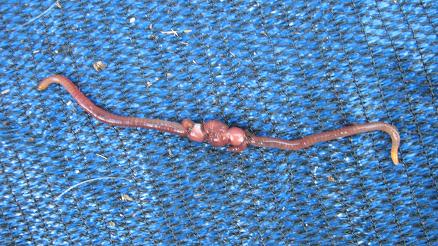
2 mature compost worms mating Why May Is Excellent for Worm MultiplicationTemperatures are usually ideal (60–77°F / 16–25°C) for rapid breeding. Worms can double their population every 2–3 months under good conditions. Abundant green waste and kitchen scraps make feeding easy and cheap. Your May Multiplication Checklist (Do These 4 Things)Do these 4 things for best results:1.Feed consistently but not too much — Give 1 - 1.5 cups of food per pound (450g) of worms every week. Slow down the food addition if you notice that the worms are not keeping up. 2.Keep bedding moist — Like a wrung-out sponge (60–80% moisture). Do the squeeze test: Take a fistful of bedding in your hand and squeeze it. If a few drops of liquid show up, the moisture level is perfect. 3.Add a little carbon-rich bedding weekly — Shredded corrugated cardboard, newspaper, or coconut coir to balance nitrogen-rich food. 4.Maintain good airflow — Loosen the top layer gently with a hand fork every second week. Make sure your tool doesn’t have sharp edges to avoid harming worms. Worm FoodWhy Feeding Is One of the Most Important (and Tricky) Parts of Worm Composting Feeding your worms correctly is the heart of successful vermicomposting. Get it right and your worms will multiply quickly, produce beautiful rich castings, and stay healthy for years. Get it wrong and you can lose your entire colony in just a few days. Many beginners (and even some experienced worm keepers) make fatal mistakes in this area: overfeeding, feeding the wrong foods, burying nothing and attracting fruit flies, or letting the bin become too wet or acidic. These errors often lead to odors, escaped worms, or a complete system collapse.The good news? Once you understand a few simple principles — balance between “greens” (nitrogen-rich food) and “browns” (carbon-rich bedding), proper portion size, and consistent burying — feeding becomes easy and rewarding. In May, with warmer temperatures and more kitchen scraps available, smart feeding is especially important because your worms are actively breeding and can turn food into castings faster than ever. Below is your practical May Feeding Guide to help you avoid the common pitfalls and keep your worms thriving. Feeding Guide for May 2026How Much per week - per 1 lb / 450 g of worms)Vegetable & fruit scraps, Amount: ½ – 1 cup. Tips: Chop finely and bury under the bedding. Coffee grounds, Amount: ¼ cup Crushed eggshells, Amount: 1–2 tbsp. Tips: Great for calcium & grit. Garden greens & trimmings, Amount: ½ cup. Tips: Chop small. Excellent for worm growth and activity. Bread, pasta, rice, Small amounts only. Amount: 1–2 tbsp. Tips: Feed occasionally. Meat, dairy, oily food → No. Amount: None. Tips: Avoid completely. Citrus & onions → Very little. Amount: Max 1 tbsp. Tips: Can make the bin too acidic. (The amounts given are general guidelines. If your worms are feeding faster than expected, increase the food slightly. If food keeps building up, reduce the amount.) Pro Tip:Always bury food 2–3 inches deep to prevent fruit flies and odors.Worm casting are amazing
Tip of the Month: “The Coffee Filter Method”Save your used coffee filters (with grounds inside) and place them directly on top of the bedding. The worms love the grounds in moderation, and the paper filter slowly breaks down with time. This is an easy way to feed while reducing kitchen waste — many readers report excellent results with faster worm activity.
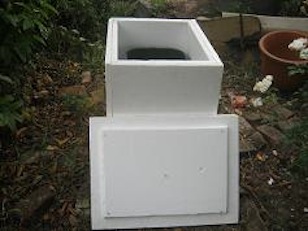
Quick May Troubleshooting1. Bin getting too warm? Move it to full shade, insulate it with wet towels or place it in a polystyrene box on hot days. 2. Fruit flies appearing? Stop feeding for 3 days and cover the surface with 1 inch of damp shredded newspaper. 3. Worms slowing down? Check moisture level and add more bedding — they may be too crowded.
A polystyrene box like the one above is a great protection for your worm bin against extreme hot or cold weather. Worm Composting WorkbookP.S. We are hard at work creating the Worm Composting Workbook for Beginners — it will include monthly planners, feeding logs, troubleshooting flowcharts, and more. We hope to release it in the coming months. Reply with “Workbook” if you want to be notified as soon as it’s ready! Quick question for you: Reply to this email and tell me —What results have you seen so far this spring, or what is your biggest worm question right now? I read every reply and will share the best questions and answers in the next newsletter. Wishing you exploding worm populations and beautiful black gold this May! Warm regards, Stephan worm-composting-help.com Author of “How to start a profitable worm business on a shoestring budget” Q&A / Questions Block:Got specific questions about your worm bin, feeding schedules, moisture levels, harvesting castings, or starting a small worm business?Simply scroll to the bottom of most pages on www.worm-composting-help.com and use the Interactive “Your Questions about Worm Composting?” form. I read and answer every single one personally. The most helpful and common answers will also be shared in upcoming newsletters so the whole community benefits. |
| Back to Back Issues Page |