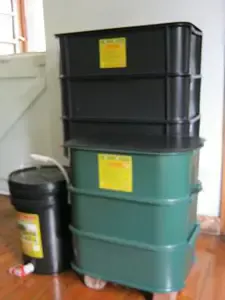
Can I simply add more worms to the dog poo compost bin?

by Jessica
(Australia)
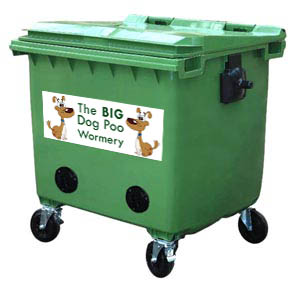
Worms compost dog poo

Worms compost dog poo

Hi Stephan,

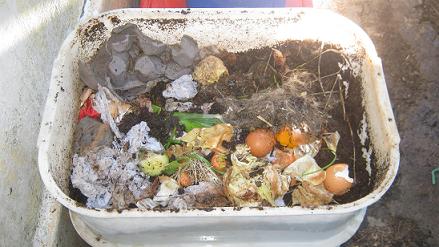
I've had a dog poo compost bin set up for 3 months now, originally with 1,200 worms. The issue is, I can smell the poo when I am near the bin, and most certainly when I open the lid - inside, it looks like no poo is being eaten. Can I add more worms to help speed up the process, or am I likely to have some other problem?

Thanks!

Jessica

Comments for Can I simply add more worms to the dog poo compost bin?

Average Rating starstarstarstarstar

Click here to add your own comments

Oct 14, 2016
Rating
starstarstarstarstar
Re: Can I add more poo to the dog poo compost bin
by: Stephan

Hello Jessica,

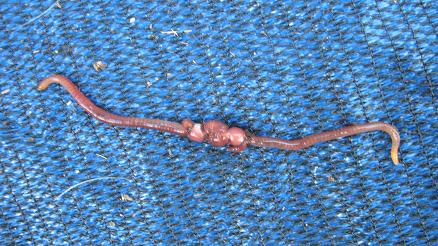
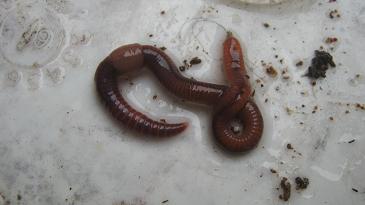
great to hear that you started to recycle dog poo in a worm compost bin. Generally it is quite fine to add more worms to a worm bin but you must consider that each worm farm can host only as many worms as its size allows. Compost worms can usually be found on or near the surface of their living environment in the top 10cm / 4 inches and they multiply on average to about 10000 worms per square meter / 10.76 square feet of surface area. In order to work out how many worms your worm farm can host you will have to measure it and find out how many worms your worm bin will be able to support.

Once you got that number you can work out how much dog poop your worms will be able to consume on a daily basis. Taken into account that compost worms can eat on average about half their body weight in captivity this means that 4000 worms (Eisenia fetida) known as well as "Red wrigglers" can eat about 500 Gram / 17.6 ounces.

With these numbers at hand you will be able to work out how much waste your worm herd will be able to consume in your worm bin once they have multiplied to capacity. After 3 month your original worm herd should have more than doubled and you should have about 2500 worms in your bin if everything is alright inside. You take a small hand shovel and carefully lift some of the uneaten dog poo to find out if your worms are still alive and actively feeding. You should find them not far below the surface of the poop and worm bedding. If you find worms actively roaming around in your bin that is a good sign and the reason why it seems that they are not feeding on the dog poo might be that you are adding more waste to the bin than the worms can eat.

This will lead to a build up of uneaten food and it will look as if the worms are not active at all. In this case it would be advisable to either start a second worm bin or reduce the amount of food you add to the bin till the worms have caught up. In a healthy worm bin you will never notice bad odors because the worms will feed only on the materials that are starting to decompose. Those are the exact particles that produce bad smells. So if the worms are able to eat all the waste that could become a nuisance for the nose the worm farm will not produce bad smells at all but will rather smell similar to a nice moist forest ground.

Dear Jessica I hope this will help you to assess the situation in your dog poo worm bin. Please let me know what the outcome is and if you have any further questions please feel free to let me know.

Kind regards and blessings for you and your family

Stephan Kloppert

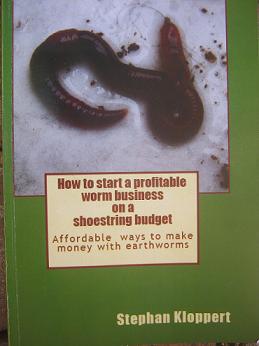
Aurhor of "How to start a profitable worm business on a shoestring budget"

Editor of www.worm-composting-help.com

Click here to add your own comments

Join in and write your own page! It's easy to do. How? Simply click here to return to Questions about worm composting.


"Want to turn your worm bin into a real income? "How to Start a Profitable Worm Business on a Shoestring Budget" — the complete step-by-step guide from 25 years of real worm farming experience. Get it on Amazon:

🪱
Want to earn money from worm farming?
The complete guide to starting a profitable worm business
How to Start a Profitable Worm Business on a Shoestring Budget by Stephan Kloppert On Special
“How to Start a Profitable Worm Business on a Shoestring Budget”
Real-world proven methods from 25+ years of hands-on worm farming experience across South Africa and Germany — by Stephan Kloppert
Paperback$12.99 Order on Amazon
Kindle eBook$4.99 Get on Kindle
★ Special prices valid till 31.07.2026
Verified Amazon Customer Reviews
★★★★★
“Everything about building a worm farm is described step by step. Highly recommended!”
— Hubertus, Germany ✓ Verified Purchase
★★★★★
“Well written, informative and oftentimes humorous. A very cost efficient and simple business.”
— Adam J. McKee, United States ✓ Verified Purchase
★★★★★
“No crazy tricks — just straight forward, useable information.”
— Kimberly, United States ✓ Verified Purchase


↓ Free instant download

Free checklist: 7 mistakes killing 90% of beginner worm farms

Get instant fixes for problems like:

✓ Why worms escape or disappear overnight

✓ The #1 feeding mistake that causes maggots

✓ How to fix a bin that smells terrible fast

Enter your email below and click the button:

🔒 No spam. Unsubscribe any time. Trusted by worm farmers in over 40 countries.

"Want to turn your worm bin into a real income? "How to Start a Profitable Worm Business on a Shoestring Budget" — the complete step-by-step guide from 25 years of real worm farming experience. Get it on Amazon:

From a 25-year worm farmer
Turn your worms into a profitable business
How to Start a Profitable Worm Business on a Shoestring Budget by Stephan Kloppert
On Special
“How to Start a Profitable Worm Business on a Shoestring Budget”
by Stephan Kloppert
Paperback$12.99
Kindle$4.99
Order on Amazon Get Kindle Edition →
★ Special prices valid till 31.07.2026
Verified Amazon Customer Reviews
★★★★★
“Everything about building a worm farm is described step by step. Highly recommended!”
— Hubertus, Germany ✓ Verified Purchase
★★★★★
“Well written, informative and oftentimes humorous. A very cost efficient and simple business.”
— Adam J. McKee, United States ✓ Verified Purchase
★★★★★
“No crazy tricks — just straight forward, useable information.”
— Kimberly, United States ✓ Verified Purchase


SearchSuchen


How worms recycle human manure