
Worm tea: organic fertilizer and natural pesticide
Worm tea is worm castings brewed in water with molasses. For 20 litres / 5.29 gallons: 1 kg / 2.2 lb castings + 25 ml / 1 tbsp molasses in chlorine-free water, aerated 24 hours. Use within 24 hours for best results, pure or diluted 5:1 with water.
When I offer worm tea (some people also call it compost tea), many still smile or look puzzled. More gardeners and farmers are learning its benefits. After nearly 30 years of worm farming, first in South Africa and then in Germany, worm tea is one of the products I recommend most often once you have worm castings to spare.
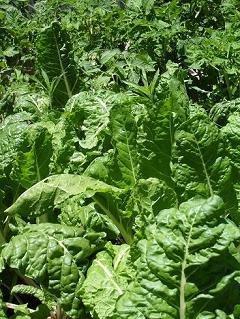
Shrubs, trees, flowers, vegetables, seeds, seedlings and lawns all respond well to it.
What is worm tea?
Worm tea is produced when worm castings are mixed with water and molasses and brewed for 24 hours. Molasses feeds the beneficial microorganisms in the castings; brewing multiplies them rapidly.
- Acts as a natural fungicide and insecticide
- Works as an organic fertilizer
- Will never burn plants
- Improves soil structure and plant health
How do I brew worm tea (20 litres / 5.29 gallons)?
You need: a bucket or tank, an air pump with tubing, an air stone (aquarium type), worm castings, molasses and water. No castings yet? Start a worm farm.
1Fill the bucket with chlorine-free water
Pond water is ideal. Tap water: add the air stone and run the pump for 12 hours so chlorine evaporates.
2Add worm castings
Add 1 kg / 2.2 lb of pure worm castings.
3Add molasses
Add 25 ml / 1 tablespoon of molasses as food for the microbes.
4Aerate for 24 hours
Run the air pump for 24 hours.
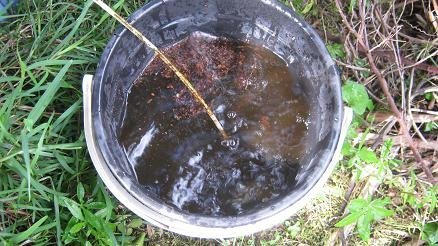
Worm tea brewing in a bucket 5Remove the air stone and use it
Use immediately for best results (within 24 hours). It stays beneficial for several months if bottled; shake before use.
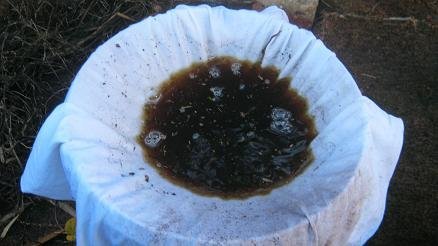
Worm tea ready to bottle
How do I use worm tea on plants?
- Soil drench: pour around the root zone. Pure tea is fine; diluting 5 parts water to 1 part tea still works well.
- Foliage spray: filter through a cloth first so solids do not block the sprayer.
- Timing: best within 24 hours of brewing, while microbes are most active.
Is the liquid from the bottom of my bin the same as worm tea?
No. Liquid that drains from a worm bin is leachate. It can be useful diluted, but it is not aerated, molasses-brewed tea. Leachate can go anaerobic and smell; use it cautiously and dilute well. True worm tea is intentionally brewed with air and a food source for microbes. More on farm liquid: starting a worm farm.
How long does bottled worm tea keep?
Best within 24 hours of brewing. Bottled tea can still help for several months; shake before each use to wake remaining microbes. For farm or orchard volumes see large-scale worm tea production. A brewing log in the Easy Worm Farming Planner helps you compare batches.
What plants benefit from worm tea?
All kinds of plants respond: shrubs, trees, flowers, vegetables, seeds, seedlings and lawns. Use it as a soil drench or filtered foliar spray. Start with dilution if you are unsure, then move toward stronger tea as you see results.
Tips for a good brew
- Use pure castings, not half-finished bedding full of scraps.
- Unsulphured molasses works well as the microbe food.
- Keep the air stone running the full 24 hours; stagnant tea can go anaerobic and smell bad.
- Brew only what you can use soon for peak microbial life.
Try the recipe and compare notes. Farm-scale volumes: large-scale worm tea production.
What if my worm tea smells bad?
A healthy brew smells earthy or slightly sweet from the molasses. A rotten smell usually means the tea went anaerobic: not enough air, too many solids, or it sat too long without use. Discard foul tea, clean the bucket, and brew a smaller batch with stronger air flow next time.
Happy worming!
Stephan Kloppert
Nearly 30 years of worm farming in South Africa and Germany
Running your worm farm as a business? How to Start a Profitable Worm Business on a Shoestring Budget shows you the way.