Worms convert dog poop into plant food
Yes, compost worms will happily eat dog poop. Set up a separate worm bin just for the poop, add at least 500 to 1,000 compost worms, scoop with gloves or a bag, keep the surface covered, and use the castings on flowers, trees and lawns only — not on fruit and vegetables.
Dealing with dog poop is one of the things every dog owner dreads. There are millions of nicer topics than dog waste. But every proud owner of a German Shepherd, Jack Russell, Husky or any other breed has to make a plan. Dog feces can be annoying, smelly and a source of disease: dog waste can carry bacteria such as E. coli and salmonella.
After nearly 30 years of worm farming, first in South Africa and then in Germany, I still run a “pet poop composter” in the backyard that has been fed exclusively on dog poop for close to 15 years. The worms are happy, and their breeding in those bins is exceptional. This page shows you how worm composting turns dog poop into plant food, and answers the questions readers ask most often.
Probably the most common way to deal with dog waste is to scoop it into the rubbish bin. That clears the yard, but the waste still goes to landfill and remains a communal health issue. Worm composting is the better path: compost worms convert dog poop into nutrient-rich castings you can use on ornamentals.
- Will compost worms eat dog poop?
- How do I set up a dog poop worm bin, step by step?
- How many worms do I need for my dogs?
- Do I need to dry or prep dog poop before feeding?
- Why aren’t my worms eating the dog poop?
- Can I mix dog poop with kitchen scraps in one bin?
- Will a dog poop worm bin smell or attract flies?
- What are the benefits of recycling dog poop with worms?
- Can a dog poop worm bin survive winter?
- How often can I add dog poop?
- Can I fish with worms from a dog poop bin?
- What if my dog was recently wormed?
- Can one farm handle a dog day-care or many dogs?
- Single bin or stacking bin for dog poop?
- What bedding and moisture does a dog poop bin need?
Will compost worms eat dog poop?
Yes. Dog poop is an excellent food for compost worms. Worms have no teeth and feed on soft, decomposing material — and dog waste fits that perfectly. Red wigglers (Eisenia fetida) and European nightcrawlers both handle it well.
Give a new bin time. Worms need a few weeks to settle into a new home and a new diet. Once they are established and breeding, they process dog poop much faster. Mold on the surface is normal at the start; it is part of the breakdown.
How do I set up a dog poop worm bin, step by step?
Follow the five steps below. Keep the bin in the shade. Compost worms cope with about 5–29 °C (41–84.2 °F), and they do best at 15–25 °C (59–77 °F). A log of what you add and when helps you see how much poop your herd can handle — the Easy Worm Farming Planner has printable pages for that.
1Get a worm bin just for the dog poop
Buy or build a homemade worm compost bin. A simple bucket or stacking bin works. Keep it separate from your kitchen-scrap bin if you want castings for food plants later — castings from a dog-poop bin are for ornamentals only.
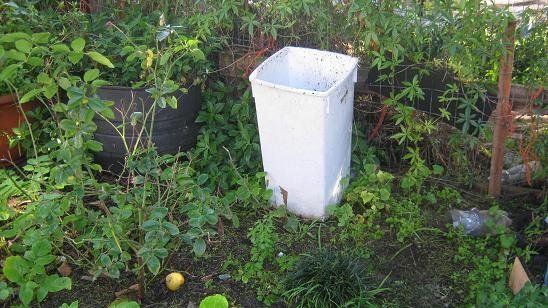
A simple homemade worm bin 2Add the right compost worms
Use Eisenia fetida (compost worms, red worms, red wigglers). If you cannot get them, European nightcrawlers work well too. Depending on the size of your dogs, start with at least 500 to 1,000 worms. Bigger bins can take more; worms grow larger when they are not crowded.
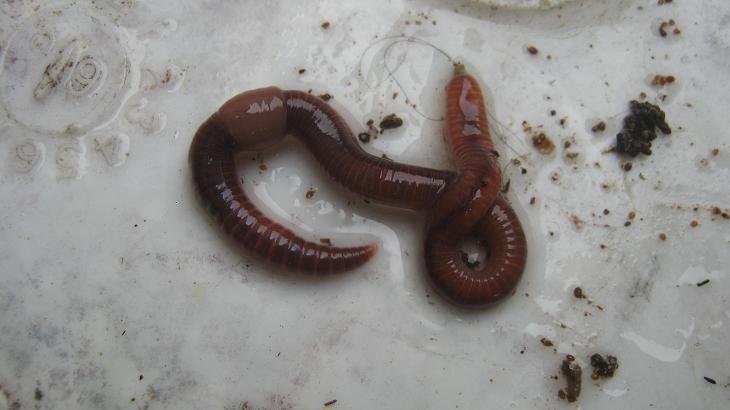
Eisenia fetida is an excellent compost worm 3Scoop up the poop safely
We have worked with dog waste for many years and never had health issues, but it is good practice to wear rubber gloves or use a plastic bag when scooping.
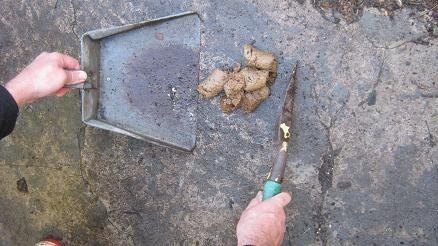
To recycle dog waste, scoop it up 4Add it moist — no drying needed
Dump the poop straight into the bin. There is no need to let it dry out first. Worms breathe through their skin and suck soft food; moist dog poop is far easier for them than hard, dried lumps. If older poop has gone hard, soak it in a little water before adding it. Cover the surface with bedding.
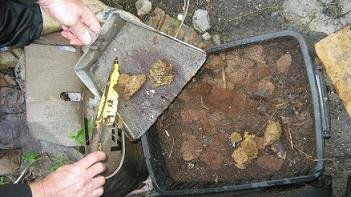
Dog poop added to the worm bin 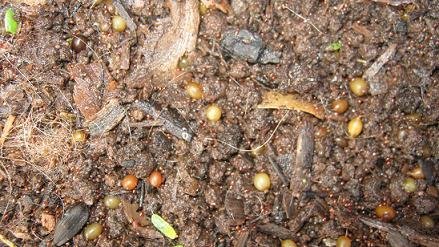
More than 20 worm cocoons in a tiny space 5Use the castings on ornamentals only
The worm castings fertilize flowers, trees and lawns, but should not be used on fruit and vegetables. I once planted a sunflower seed in a dog-poop worm bin; it germinated, and when it was about 5 cm / 2 inches high I moved it into a bucket of those castings, where it grew into a big sunflower.
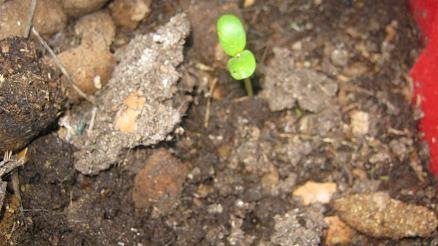
A sunflower seedling in the dog poop worm bin 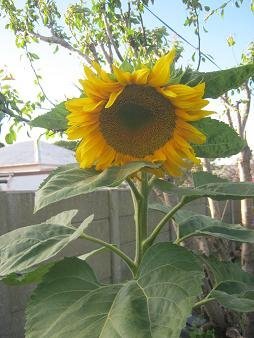
The sunflower in bloom
How many worms do I need for my dogs?
As a starting rule of thumb: at least 500 to 1,000 compost worms for a typical household, and more if you have several large dogs. Two large + two medium + one small dog will need either a bigger bin or several bins, and you should add worms gradually as the herd multiplies rather than dumping every scoop on day one.
Do not overfeed. Add only as much poop as the worms can process in a few days, cover it with bedding, and wait. As the population grows you can increase the amount. For a dog day-care or rescue with hundreds of dogs, plan multiple beds or a dedicated outdoor system — see also large-scale dog poop worm composting.
Do I need to dry or prep dog poop before feeding?
No. There is no need to let dog poop dry out first. Moist waste is better, for two reasons:
- Worms breathe through their skin. A dry bin lets particles stick to them and can suffocate them.
- Worms suck soft food rather than chew it. Soft, moist poop is far easier for them than hard, dried lumps.
Collect it from the yard and add it straight away. If older poop has gone hard, soak it briefly in water before adding it.
Why aren’t my worms eating the dog poop?
Patience first: a new bin often sits for weeks before the worms really dig in. Check that:
- You started with enough worms (hundreds, not a handful).
- The bedding stays moist like a wrung-out sponge — not soggy, not dusty.
- Hard, dried poop was softened with water.
- You are not burying them under a mountain of fresh waste on day one.
Mold on untouched poop is fine; it helps break the material down. Once the herd settles and multiplies, recycling speeds up a lot. More detail: Why don’t my worms eat the dog poop?
Can I mix dog poop with kitchen scraps in one bin?
Yes — worms like a varied menu, and mixing dog poop with other worm food is fine. Collect scraps and poop in one bucket if you like, then add them together. Just do not overfeed.
The reason I still recommend a separate dog-poop bin for many households is the castings: if you ever want castings for fruit and vegetables, keep kitchen scraps in their own bin. Dog-poop castings stay on flowers, trees and lawns only.
Will a dog poop worm bin smell or attract flies?
A healthy worm bin never smells. Odour means the bin is too wet, overfed, or the waste is sitting uncovered on the surface. Bury the poop under bedding and keep a thick cover of shredded paper or cardboard on top.
Flies (including black soldier flies) lay eggs on exposed waste. Bury food, cover the whole surface, and see how to keep black soldier flies out of a dog poop worm bin and maggot infestation in my worm farm.
What are the benefits of recycling dog poop with worms?
- No bad odours in the backyard or garden (when the bin is healthy)
- Less waste rotting on landfill sites
- A constant supply of worms that recycle organic waste
- Fat worms for freshwater fishing (rinse them before you use them as bait)
- Extra worms you could sell for a little income
- Worm castings to fertilize flowers, trees and lawns (not fruit and vegetables)
Compostable dog-poop bags? Only bags that truly break down in a cool worm bin belong there. Many “compostable” bags need industrial heat. If in doubt, empty the bag into the bin and dispose of the bag separately. See compostable dog poop bags in a worm farm.
Can a dog poop worm bin survive winter?
Compost worms slow down in the cold. Compost worms cope with about 5–29 °C (41–84.2 °F), and they do best at 15–25 °C (59–77 °F). In a hard frost, move the bin into a garage, shed or basement, insulate the sides with straw or cardboard, and reduce feeding. Do not leave a thin plastic bin outdoors in deep freeze without protection. When warmth returns, the herd speeds up again.
How often can I add dog poop?
Add only as much as the worms can process before the next feed. For a new bin that may mean a small scoop every few days, not every daily walk’s worth. Cover each addition. If you can still see uneaten poop from the last feed, wait. As the population grows — watch for cocoons — you can increase. A healthy bin smells earthy, never like a toilet.
Can I fish with worms from a dog poop bin?
Yes. Many readers use them as freshwater bait. Rinse the worms in clean water before you put them on a hook so you are not transferring waste. Keep a separate kitchen-scrap bin if you prefer bait worms that never touched pet waste.
What if my dog was recently wormed?
Readers sometimes ask whether poop from a dog that was given worming medicine will kill compost worms. As a precaution, skip adding waste for a short period after treatment and resume with small amounts while you watch the herd. If worms look stressed (escaping, clumping), add fresh bedding and pause feeding. When in doubt, keep a separate small test bin.
Can one farm handle a dog day-care or many dogs?
Yes, but not with a single hobby tray. Plan multiple bins or outdoor beds, start with a strong breeding stock, and expand only as fast as the worms multiply. Cover every feed. Large volumes attract flies if left exposed. See large-scale ideas for dog poop worm composting and recycling dog poop from a dog day-care centre.
Single bin or stacking bin for dog poop?
Either works. A single bin with drainage holes is fine if you harvest by hand. A stacking homemade worm compost bin makes harvesting easier because worms move up to fresh food. Whatever you choose, keep shade, moisture and a covered surface. Outdoor bins need a secure lid against pets and wildlife.
What bedding and moisture does a dog poop bin need?
Use the same bedding as any worm farm: shredded cardboard, newspaper or similar carbon-rich material, kept as moist as a wrung-out sponge. Dog poop is wet food, so you will often need extra dry bedding after each feed to balance moisture and cover the surface. If the bin smells or looks slimy, stop feeding, mix in dry bedding, and check drainage. Temperature: compost worms cope with about 5–29 °C (41–84.2 °F) and do best at 15–25 °C (59–77 °F). More on worm bedding.
Happy worming!
Stephan Kloppert
Nearly 30 years of worm farming in South Africa and Germany
Running your worm farm as a business? How to Start a Profitable Worm Business on a Shoestring Budget shows you the way.